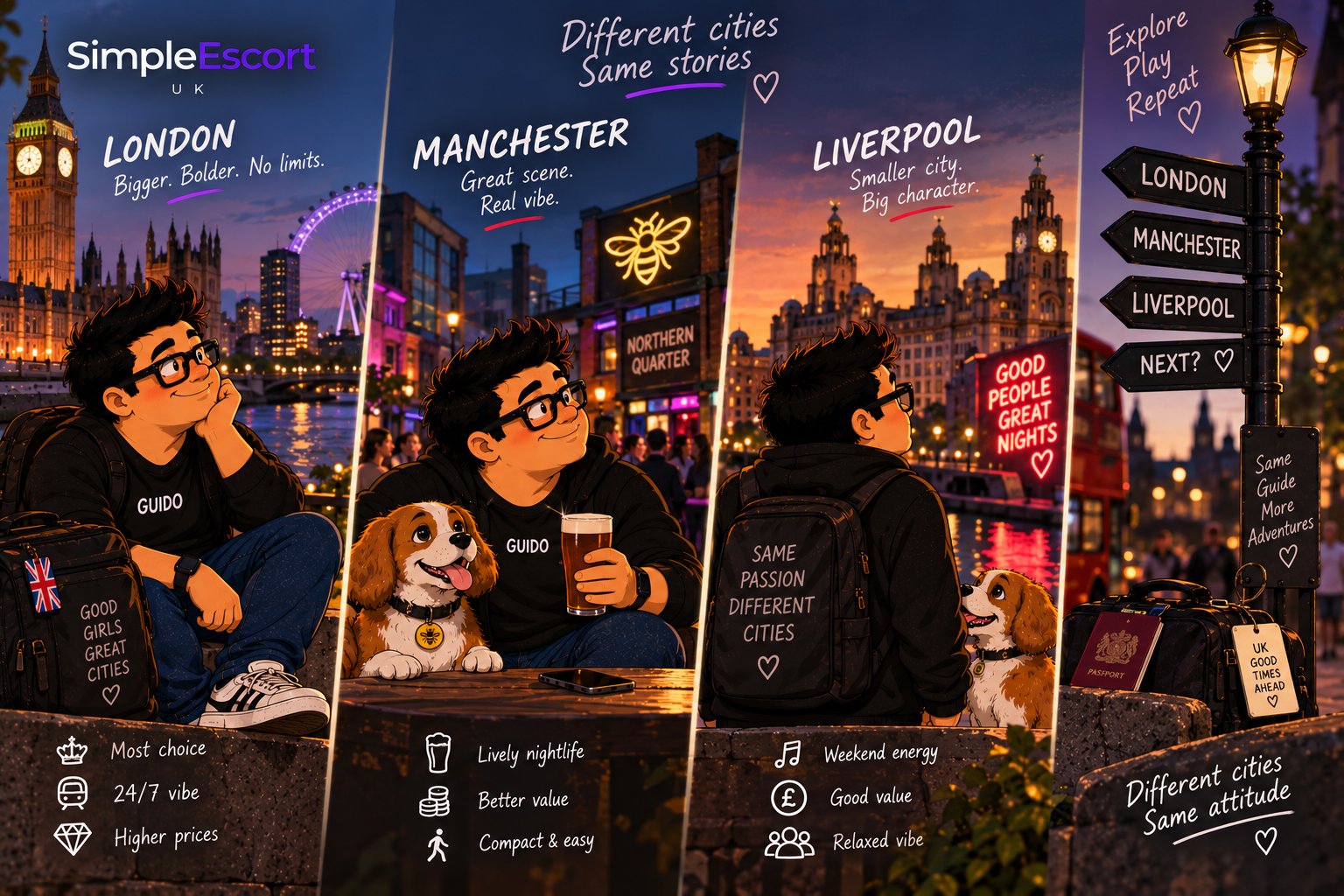

The UK’s major cities each have their own rhythm. London is vast and varied. Manchester is compact and lively. Liverpool has a more contained, weekend-driven feel. Knowing the differences saves time, money and avoids mild disappointment.
Here’s a practical snapshot of what each offers and how to move around them.
London – The Big One
London is in a different league for sheer volume and variety. You’ll find almost every nationality, price point and style of experience, from straightforward independents to the higher-end end of the scale. The concentration is strongest around Paddington, Bayswater and the central zones; Mayfair and Knightsbridge sit at the more expensive end.
Getting around is straightforward once you accept the Tube and black cabs as normal. Hotels near Paddington or King’s Cross make life easier if you’re combining a booking with a proper trip. The city never really sleeps, so availability tends to stretch later than elsewhere.
The trade-off is cost. Expect to pay more for both the booking and everything around it: hotels, taxis, even a late dinner. What you get in return is choice and a degree of anonymity that smaller cities can’t match. Beyond the booking itself, London still delivers the classic extras: decent food, theatre, and the simple pleasure of walking through a city that doesn’t shut at midnight.
Manchester – The Northern Powerhouse
Manchester punches above its weight. The independent scene is strong, especially around the Northern Quarter, Deansgate and the city centre. Prices sit noticeably lower than London while the nightlife remains excellent. It feels more walkable and less overwhelming.
Piccadilly is a practical base: close to the station, hotels and most of the action. The city has a friendly, energetic weekend atmosphere without the same intensity or price premium as the capital. You’ll find a good mix of local and touring providers, and the whole place is compact enough that you rarely waste half an hour in a taxi.
Manchester works well if you want a solid scene plus proper nightlife and food without the London surcharge. It’s also easy to reach from most of the North and the Midlands.
Liverpool – Distinct and Weekend-Friendly
Liverpool has a smaller but concentrated scene, centred on the city centre and the Albert Dock area. It feels more contained than Manchester and far less sprawling than London. Weekend demand is strong, especially when events or matches are on.
The centre is walkable and the vibe is generally relaxed. Hotels near Liverpool Lime Street or the docks put you within easy reach of most places. Value is usually better than both London and Manchester for a comparable experience.
What stands out is the character. Liverpool doesn’t try to be a smaller version of the other two. It has its own pace and its own regulars. If you prefer something a bit more local and less frantic, it’s worth considering.
Choosing (and moving between them)
- Maximum choice and anonymity: Choose London
- Best balance of scene, nightlife and value: Choose Manchester
- Compact, distinct and weekend-oriented: Choose Liverpool
Trains between the UK’s major cities are frequent and relatively painless. If you’re hopping, book hotels near the main stations and keep plans flexible. Local reviews and recent forum chatter still matter more than any general guide, scenes shift, and the best information is usually the freshest, especially when verifying identity.
Every city has its own quiet codes. Match the place to the kind of weekend you actually want, rather than defaulting to the biggest option. The rest tends to fall into place.